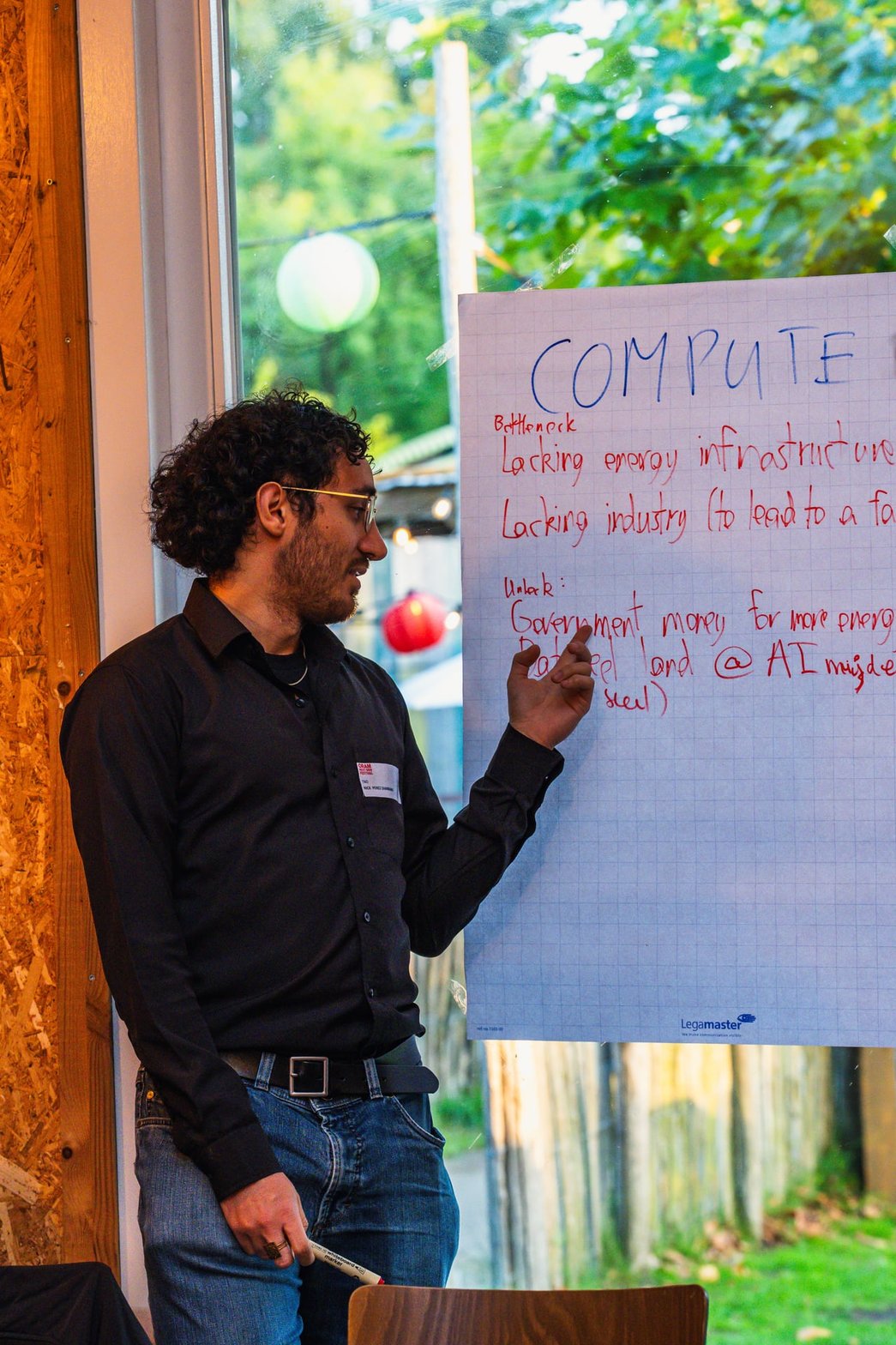
On 28 August, young professionals gathered at the ORAM Next Gen Festival at UP Events — the region's yearly meeting point for the 20-to-39-year-olds already shaping the Amsterdam Metropolitan Area. One of the day's sharpest sessions put a question to the room that the whole region is quietly facing: we have everything we need to lead in AI, so why aren't we scaling?
The gap is real
The region really does have the ingredients: top-tier AI talent density, strong research at UvA, VU and CWI, real compute infrastructure, and sectors from finance to industry that make a live testing ground. And yet it doesn't scale.
"77% of the region's VC-backed deep-tech companies have raised less than $15M — and 80% of real scale-up funding comes from outside the Netherlands."
The ingredients are here. The acceleration is not. That gap was the starting point for the AI challenge From Ambition to Action, built by Karen van der Zanden and Hamed Diab Montero of applied-research organisation TNO.
How the session worked
The framing was deliberate: this isn't about them — government, "the ecosystem," some future generation. It's about the people already working inside these systems today. Rather than listen to a diagnosis, participants chose one of five bottlenecks and worked it against four questions: What's the real bottleneck? What would unlock it? What can we start in the next 100 days? Who needs to be at the table?
Where they landed
Nobody left with a finished plan — a design sprint is built to surface directions, not blueprints. But five clear threads emerged:
- Adoption: the knowledge exists, but people don't know how to reach it. Make seminars concrete, built on real use cases, and share what's available.
- Data: high-value data sits locked inside companies. Start internal — better data management, and thinking about data before a project begins.
- Compute & energy: the grid is full and ownership is fragmented. The group's real insight: this is a structural, national problem, not a 100-day fix.
- Talent: attracting and retaining talent is held back by housing and a fragmented scene. Map the region's AI companies and build a community around them.
- Capital: regulation squeezes startups, financial constraints squeeze the VCs. Sit down with investors first, then bring the willing ones to government for a middle path.
What happens next
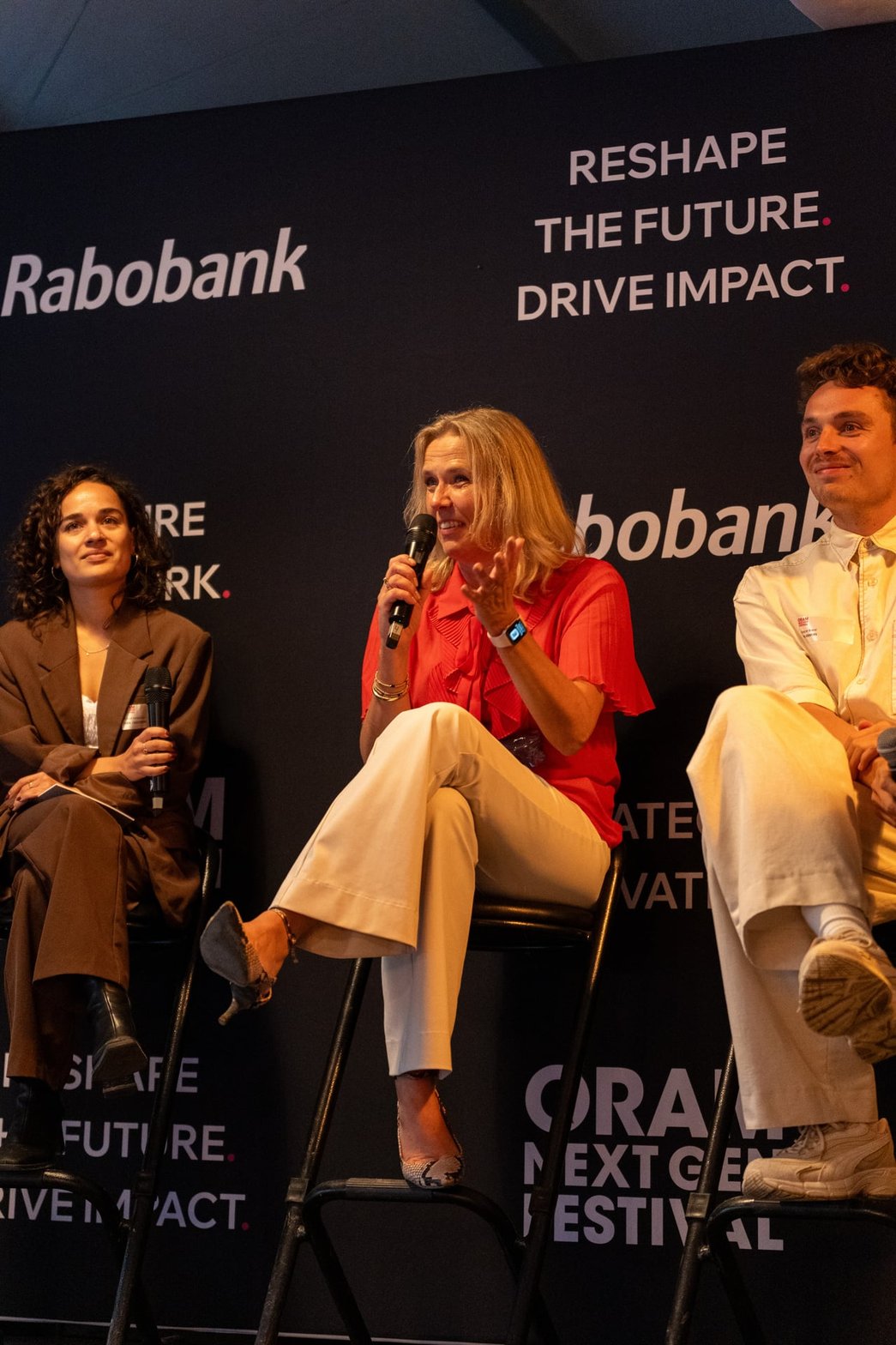
The value wasn't in any single pitch. It was in what happens next. A follow-up session will sharpen the strongest directions into something concrete and present them to the ORAM board. If the case convinces, ORAM may take it forward itself, or help place it with the partners best positioned to act.
Two directions point straight back to this generation. The first is a Next Gen network for the region's AI companies, built on a company map that already exists — so the job is to activate it, not rebuild it. The second is a role in pushing for better AI-investment conditions, by contributing substance rather than just a signature.
These ideas leave the festival with somewhere to go.